As the grid expands at record pace, the country is turning to localization — with $823.9 million allocated across 12 projects to manufacture the components it currently imports.
Uzbekistan's energy system is entering a new stage of development. Rising demand for electricity, the rapid construction of solar and wind power plants, the introduction of energy storage systems, and the expansion of trunk transmission networks are creating new and sustained demand for electrical engineering products.
This growth is no longer limited to building new power plants alone. Connecting new capacities to the grid, managing power flows, regulating voltage, rapidly detecting faults, storing energy, and digitally managing consumption all require modern electrical engineering components — most of which are still sourced abroad.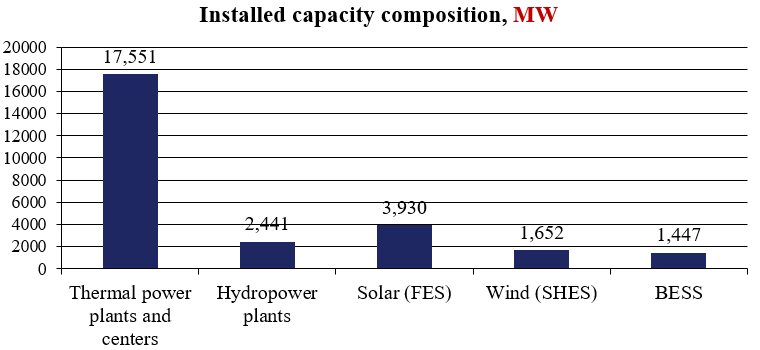
The core problem
While the country's energy infrastructure expands, a large share of the high-tech components required for its operation — BMS modules, DSP processors, HVDC and FACTS equipment, OLTC, high-voltage bushings, protection automation, smart circuit breakers, wind components and residential storage — is imported. That raises foreign-currency outflow, deepens external dependence, and limits local engineering capability.
Localization is not simply import substitution — it is a strategic task that ensures energy security and industrial independence.
Ministry of Investments, Industry and Trade
Twelve projects, five regions
The Ministry has developed 12 investment projects aimed at closing these gaps — spanning storage and digital management, trunk transmission and high-voltage equipment, transformer components, and renewable energy parts.
| Project | Region | CAPEX, $M | Revenue, $M | IRR | ROI |
|---|---|---|---|---|---|
| BMS module manufacturing | Karakalpakstan | 8 | 15.5 | 34.4% | 24.7% |
| DSP chip manufacturing | Karakalpakstan | 300 | 136.3 | 21.2% | 35.5% |
| Wind generator components | Navoiy | 116.3 | 120 | 27% | 21% |
| Relay & protection automation | Andijan | 5 | 5 | 35% | 31% |
| OLTC manufacturing | Andijan | 20 | 14.9 | 32.1% | 38.4% |
| High-voltage bushings | Andijan | 17 | 70 | 28.2% | 45.2% |
| HVDC equipment manufacturing | Sirdaryo | 200 | 201 | 32.3% | 32% |
| FACTS equipment manufacturing | Sirdaryo | 60.2 | 73.6 | 34% | 1.3% |
| High-voltage circuit breakers | Sirdaryo | 41.3 | 36.3 | 26.9% | 25.1% |
| Smart circuit breaker | Tashkent city | 17.4 | 13.1 | 23.2% | 33.1% |
| Smart sockets and relays | Tashkent city | 17.9 | 12 | 26.6% | 29.6% |
| Home energy storage systems | Tashkent city | 20.8 | 23.1 | 26.6% | 33.1% |
| 12 projects | 5 regions | 823.9 | 720.8 | — | — |
Source: investment proposals submitted for each project.
Conclusion
The next stage of Uzbekistan's energy sector will be defined not only by building new power plants, but by domestically manufacturing the technologies that manage, protect, transmit and store that energy. Together, these projects form a foundation for a modern electrical engineering industry — expanding the manufacturing chain and strengthening the sector's technological independence.